





Hamilton Russell
Hemel-en-Aarde has been the heartland of South Africa's restrained, Burgundy-inspired New Wave. Responsible for the country's finest Chardonnay, this cool climate region has rocketed to international acclaim on the backs of several ambitious estates. Cru favourites such as Newton Johnson and Storm come to mind, but the original is surely Hamilton Russell. They make some of the best Pinot Noir and Chardonnay in the country and each vintage they release is greedily snapped up by avid collectors.
Read More
Photo
AI Chat

Prices:
-
Tim Atkin MW (96)
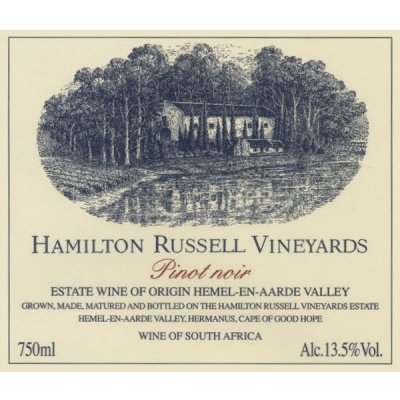
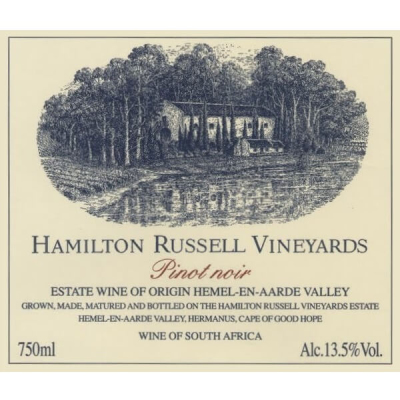
Bouncing back from the fires in 2019 - and then some - this is the best young Pinot Noir release I've tasted from Hamilton Russell. Representing a subtle shift in style towards greater perfume and fruit, this is a detailed, finely judged blend of clones 113, 115 and 667, with svelte tannins, tidy acidity, rose petal top notes and skilfully integrated oak.Inc. VAT£316.69 -
 (6x75cl) 2023
Wine Advocate (93)
This wine comes from a site with iron-rich soils, resulting in structure and savory aromas. Made with Dijon clones (113, 115, 667 and 777), the Hamilton Russell Vineyards 2023 Hemel-En-Aarde Valley Pinot Noir has dark fruit (blackcurrant), grilled rosemary and a ferrous note of rusty nail. Clones with bigger clusters are used because the site tends to produce small bunches naturally. Anywhere from 10% to 15% whole-cluster fruit is used, depending on vintage. The wine undergoes a wild fermentation, and if the winemaking team does inoculate, they use yeast from the property. Cap management has changed over the years from twice daily punch-downs to a gentle approach resembling a tea infusion, with wine poured over the cap. There is a heavier note to this wine that is specific to this site and builds a robust fruit profile.Inc. VAT£232.32
-
Tim Atkin MW (96)
Bouncing back from the fires in 2019 - and then some - this is the best young Pinot Noir release I've tasted from Hamilton Russell. Representing a subtle shift in style towards greater perfume and fruit, this is a detailed, finely judged blend of clones 113, 115 and 667, with svelte tannins, tidy acidity, rose petal top notes and skilfully integrated oak.In Bond£246.00 -
(6x75cl) 2023
Wine Advocate (93)
This wine comes from a site with iron-rich soils, resulting in structure and savory aromas. Made with Dijon clones (113, 115, 667 and 777), the Hamilton Russell Vineyards 2023 Hemel-En-Aarde Valley Pinot Noir has dark fruit (blackcurrant), grilled rosemary and a ferrous note of rusty nail. Clones with bigger clusters are used because the site tends to produce small bunches naturally. Anywhere from 10% to 15% whole-cluster fruit is used, depending on vintage. The wine undergoes a wild fermentation, and if the winemaking team does inoculate, they use yeast from the property. Cap management has changed over the years from twice daily punch-downs to a gentle approach resembling a tea infusion, with wine poured over the cap. There is a heavier note to this wine that is specific to this site and builds a robust fruit profile.In Bond£175.00